 Extended Weekend Getaways
 By Robin O’Neal Smith
Associate Editor
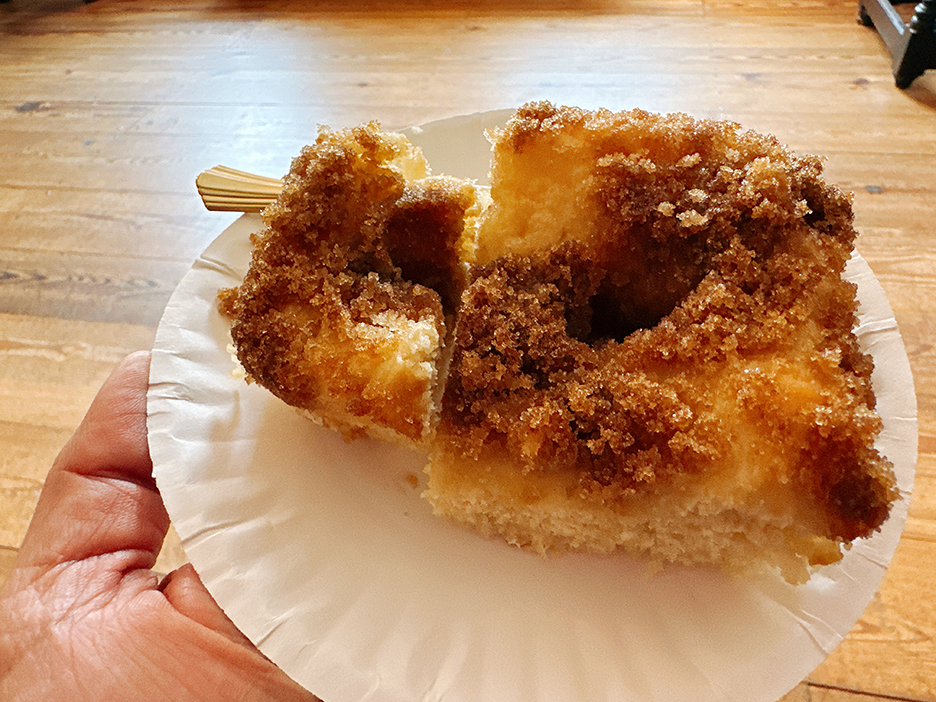
Moravian Sugar Cake from Bethlehem, PA / Photo by Robin O’Neal Smith
When I embarked on a walking tour of Bethlehem, Pennsylvania, last August, little did I know that it would lead to a delightful and delicious discovery and a strong desire to return. As our guide navigated us through the historic Moravian district, we paused inside a landmark building and were handed squares of what appeared to be an ordinary cake. The first bite of that buttery, cinnamon-topped Moravian Sugar Cake, a recipe dating back to 1753, and I was hooked.
That moment sparked my curiosity about Bethlehem’s deep connection to baking. This Pennsylvania city, founded by Moravian settlers in 1741, has woven baking into its cultural fabric for nearly three centuries. From sacred rituals to community celebrations, the ovens of Bethlehem have been fired up to create everything from traditional European pastries to Latin American sweet breads.
The Moravian Foundation: Where Baking Was Sacred
When Moravian settlers established Bethlehem on Christmas Eve 1741, they brought more than their faith, they carried treasured recipes and a reverence for baking as a spiritual practice. For these early settlers, preparing bread and cakes wasn’t merely about sustenance. It was a way to build community, and a means of expressing gratitude.
The Moravian Sugar Cake stands as the most enduring symbol of this tradition. Mixed with mashed potatoes for moisture and topped with butter, brown sugar, and cinnamon, these cakes were baked in massive communal beehive ovens. The recipe has remained essentially unchanged since 1753, passed down through generations of Bethlehem bakers who guard its authenticity.
During my Historic Bethlehem Walking Tour, our guide explained how Moravian women would prepare these cakes for Sunday services. Once made only for Sunday and special occasions, such as the Moravian Love Feasts. Today, the cake is made year round and still used for special occasions.
Baked into Bethlehem: A Living Exhibition
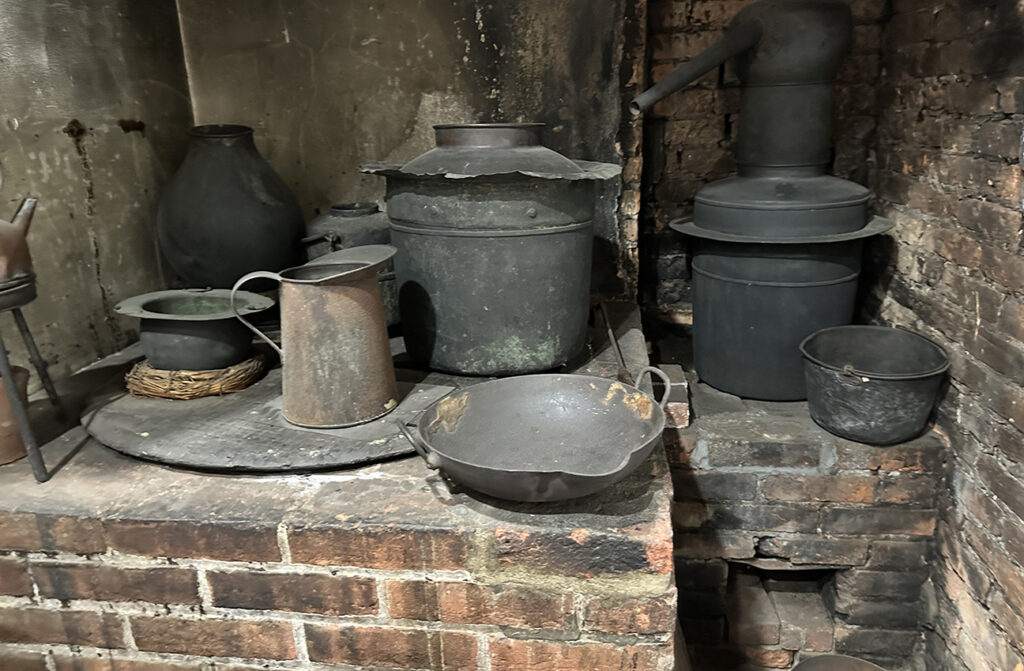
Bethlehem primitive kitchen in historic Bethlehem PA Photo by Robin O’Neal Smith
You can explore this rich heritage at the “Baked into Bethlehem” exhibition, housed at both the Kemerer Museum of Decorative Arts and the Moravian Museum of Bethlehem. This dynamic exhibition does more than display old recipes and baking tools. It celebrates how baking continues to unite Bethlehem’s diverse communities.
The exhibition features original 18th and 19th-century baking implements that reveal the discipline required to produce perfect loaves and cakes. Heavy cast-iron Dutch ovens, hand-carved wooden rolling pins, and delicate cake molds tell stories of patience and precision. Through oral histories, photographs, and interactive activities, visitors discover how each wave of immigration added new flavors to Bethlehem’s baking traditions.
A Melting Pot of Sweet Traditions
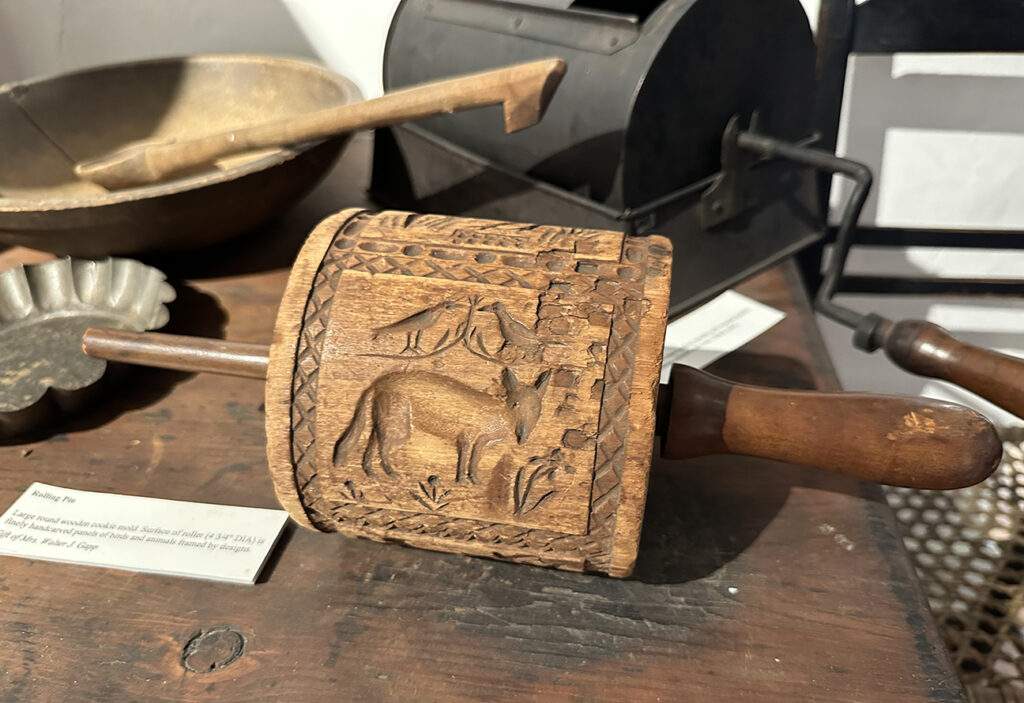
PA_BethlehemHand-carved wooden rolling pin – Photo Credit Robin O’Neal Smith
As Bethlehem grew through the 1800s and 1900s, waves of immigrants brought their own baking traditions. German, Slovak, Italian, and Latino communities established themselves in the city, each contributing distinctive pastries and breads that enriched the local food culture.
Walk through Bethlehem’s neighborhoods today and you’ll find evidence of this delicious diversity. Kolaczki, tender Czech pastries filled with fruit preserves or sweetened cheese, sit alongside crispy Italian pizzelles imprinted with intricate designs. Mexican conchas, named for their seashell-like appearance, have become as beloved as any European pastry.
This cultural exchange transformed Bethlehem from a primarily Moravian settlement into a true melting pot, where baking traditions from around the world coexist and complement one another.
Groman’s Cookies: A Modern Legend
No discussion of Bethlehem’s baking traditions would be complete without mentioning Groman’s Cookies. These buttery, wafer-thin cookies shaped like Moravian stars have achieved near-mythical status among locals and visitors alike.
Richard Groman handcrafts each batch using a recipe from the 1920s. The cookies are so popular that they’re limited to three boxes per customer, and they typically sell out quickly during the holiday season. The “Baked into Bethlehem” exhibition explores Groman’s Bakery’s history and its connection to the city’s broader baking heritage.
Holiday Baking
During the holidays, Christmas Sweets & Treats offers an opportunity to purchase traditional confections for your holiday table.
Moravian Sugar Cake and Groman’s Moravian Star Cookies are available to purchase. Also available are Kiffles, delicate pastries made by the locally renowned baker Eva Seibert, featuring flaky dough wrapped around sweet fillings, and Nut rolls from Country Cottage Bake Shop in nearby Tamaqua. They use a third-generation Slovakian recipe, each roll carefully handcrafted and filled with ground walnuts and spices.
Experience Bethlehem’s Christmas Magic
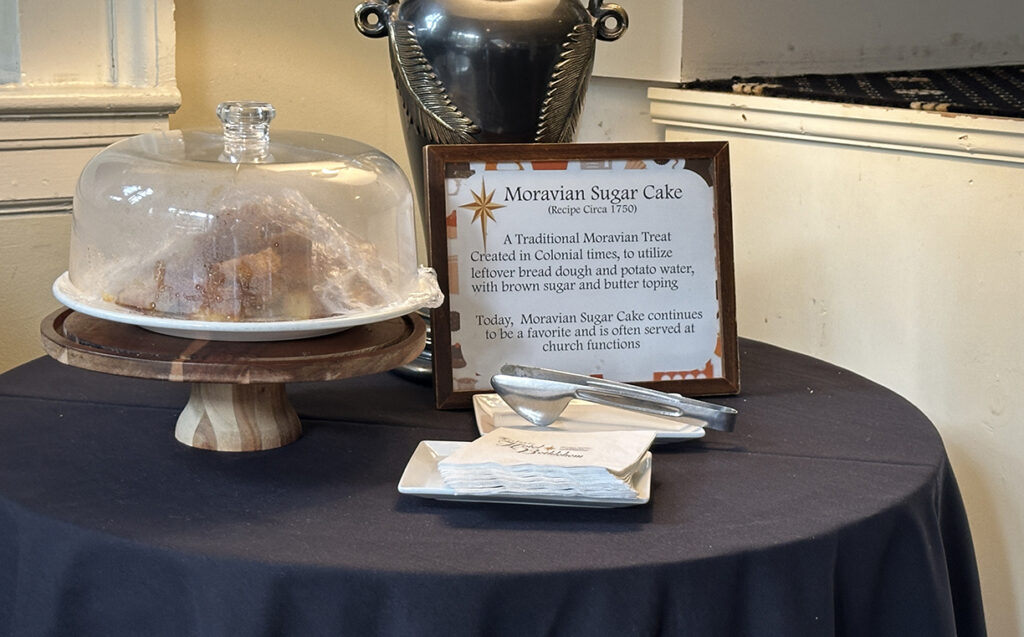
PA_Moravian Sugar Cake offered to guests at the Hotel Bethlehem – Photo Credit Robin O’Neal Smith
When planning your visit to Bethlehem, timing it for the Christmas season adds an extra layer of enchantment. After all, what better place to celebrate Christmas than in a city named on Christmas Eve and named Bethlehem?
Historic buildings throughout the district display candles in every window, creating a warm glow that transports you back centuries.
Christmas Tours
Several other tours showcase different aspects of the city’s holiday heritage:
Christmas City Stroll offers a lantern-led evening walk through the historic district, exploring over 280 years of Christmas traditions. This unique tour provides a fascinating insight into how Christmas has been celebrated in Bethlehem over the centuries, making it a must-do for anyone interested in the city’s rich cultural heritage.
Trees of Historic Bethlehem displays beautifully decorated trees that reflect the city’s multicultural heritage.
Spirits of Christmas Pub Walking Tour visits historic taverns and locations along Main Street for those interested in Bethlehem’s more spirited history.
Bethlehem By Night Motorcoach Tour provides comfortable transportation while highlighting the city’s best holiday views and historical landmarks.
Year-round, the Old Bethlehem Walking Tour remains an excellent way to explore the city’s founding and development. It’s the very tour where I first tasted that unforgettable Moravian Sugar Cake.
Where to Stay
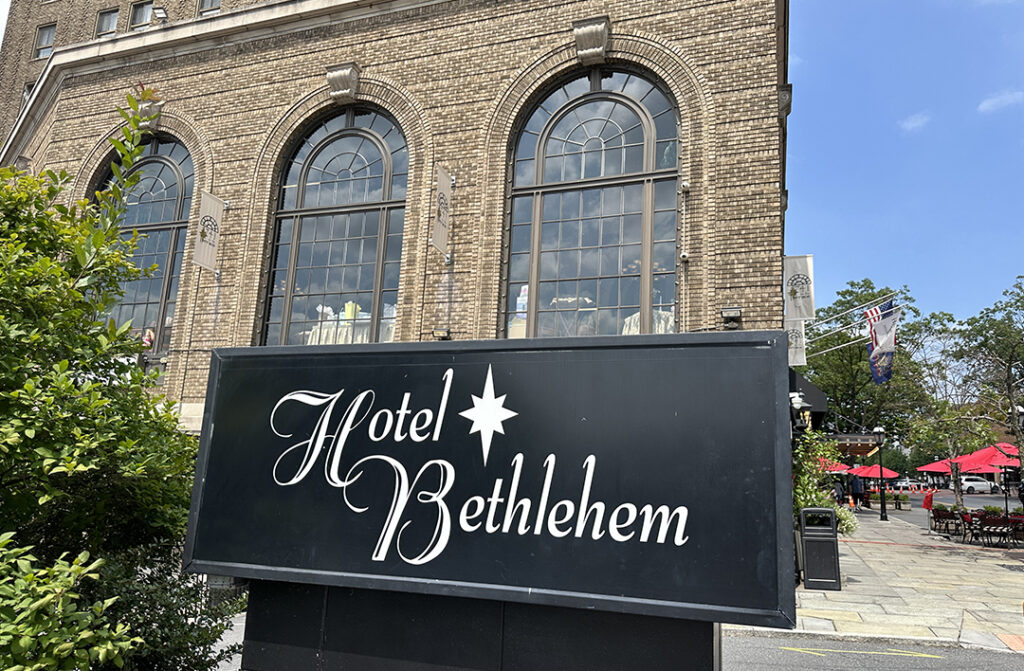
PA_Historic Hotel Bethlehem – Photo Credit Robin O’Neal Smith
During my visit, I stayed at the Historic Hotel Bethlehem, which has been voted America’s #1 Historic Hotel for five consecutive years. The hotel’s prime location on Main Street puts you steps away from museums, historic sites, and bakeries. The hotel itself has deep connections to Bethlehem’s baking traditions, according to historical accounts. They also offer pieces of Moravian Sugar Cake for their guests to taste.
A Sweet Invitation
Bethlehem’s baking traditions represent far more than recipes passed down through generations. They embody the city’s spirit of community, faith, and cultural celebration. Each cookie, cake, and pastry tells a story of immigration, adaptation, and preservation.
Whether you’re biting into a piece of Moravian Sugar Cake made from that 270-year-old recipe, savoring a Groman’s Cookie shaped like a Moravian star, or trying a Slovak nut roll perfected over three generations, you’re tasting history. These aren’t museum pieces preserved behind glass; they’re living traditions that continue to bring people together, just as they did centuries ago.
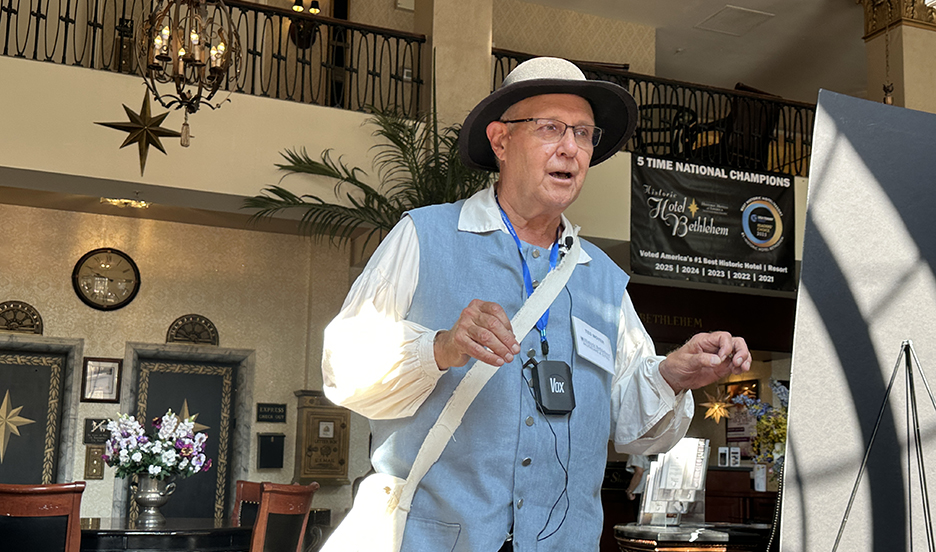
PA_Historic Hotel Bethlehem – Photo Credit Robin O’Neal Smith
Plan your visit to Historic Bethlehem to experience these traditions firsthand. Take a walking tour, explore the “Baked into Bethlehem” exhibition, and sample the diverse pastries that reflect the city’s multicultural heritage. Your taste buds and your understanding of American culinary history will thank you.