 Extended Weekend Getaways
By Kandy Derden
Associate Editor
As you navigate throughout the property, notice the meaningful Celebration of Service exhibition. One of numerous focal points dedicated to honoring and thanking all who served to provide freedom, this particular display begins and ends with twinkling light stars on each side of the oversized American flag. As you drive by, be sure to notice the memorial plaques, one for each branch of the military service. They are spaced far enough apart to allow individual attention. Yes indeed, I join with Mr. Morris to say a heartfelt thank you to all who served!
NATURE FOR SISSIES
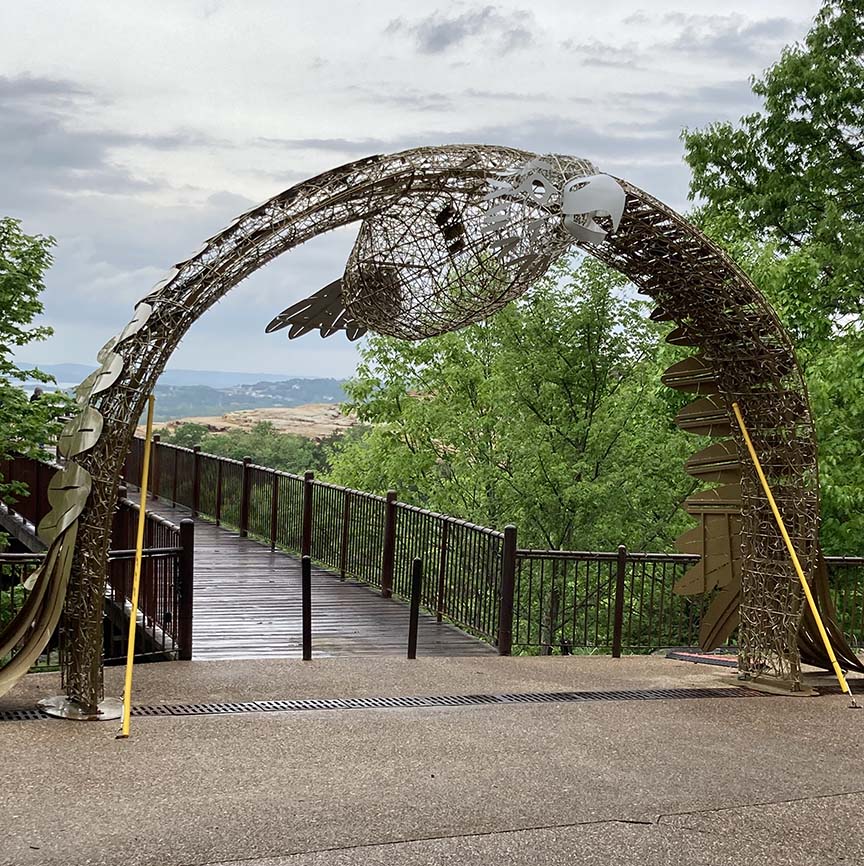
Observation Point Entrance Photo by Kandy Derden
I am not the outdoorsy type. In fact, I will go so far as to say, I don’t DO outdoors. The reason is simple; I don’t like it . . . normally. However, after visiting Top of the Rock, I’m re-thinking this position.
For starters, the trail is clearly marked to prevent any directionally challenged people from getting lost.
Ready for the best part? The trail is paved, which makes it much easier to navigate and traverse the grounds. It enables visitors to enjoy the beauty surrounding them, seeing all the best nature has to offer without having to keep eyes glued to the ground to prevent obstacles. Then I heard about the electric carts available for use on the trail and I knew I could do this and quite possibly even actually enjoy it. Win, win!
The trail is also quite suitable for walkers and smooth enough for families pushing strollers. Safety features are in place for those who choose to walk the trail or for anyplace cart drivers may choose to stop and walk around a bit while taking pictures. Footbridges are in place for pedestrians wherever there is flowing water and handrails are located as needed for uneven ground.
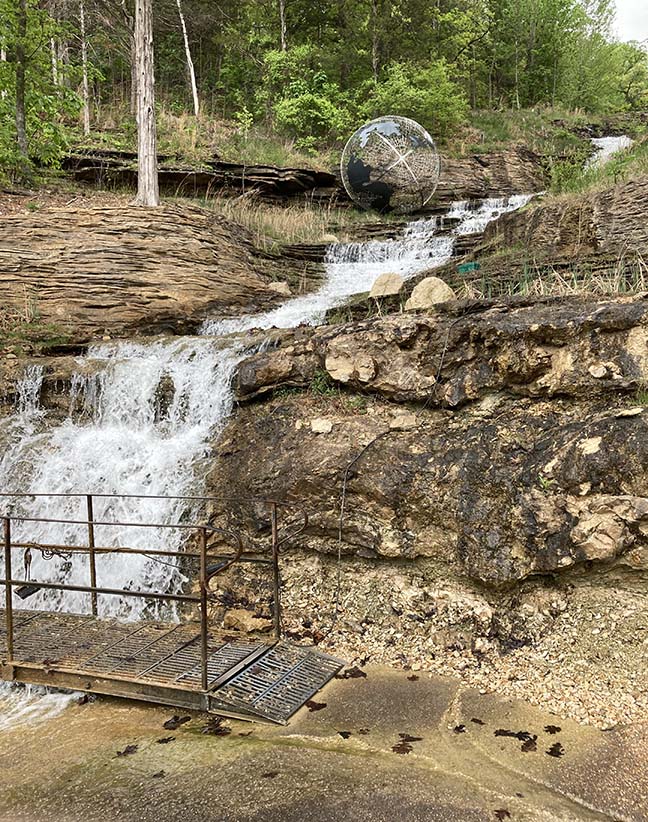
A few specifically selected, man-made enhancements have been strategically placed to enhance the experience without detracting from the magnificence of the scenery on this rugged, and yet easily accessible paved trail. Some of the rocks have been repositioned and rail fences were built for landscaping purposes, but the waterfalls are all natural.
Along the way, we encountered Kandi, a member of the security team. She was checking the paved pathway for slick spots after a recent rain. As she sprinkled sand to give the carts enough traction to drive up the hills, she answered our questions and pointed out great photo locations. A wealth of information, she told us to watch for more than 25 bird feeders scattered among the trees. Each birdfeeder is filled daily with black oil sunflower seeds, which are particularly popular with cardinals and blue jays. I must admit, I wouldn’t have noticed the bird feeders on my own, but the birds were fun to watch whenever we saw them.
 The first waterfall we saw was mesmerizing. There’s something majestic about the thundering sound of water pounding onto rock. In contrast, the sound of water trickling past in a brook can be very soothing.
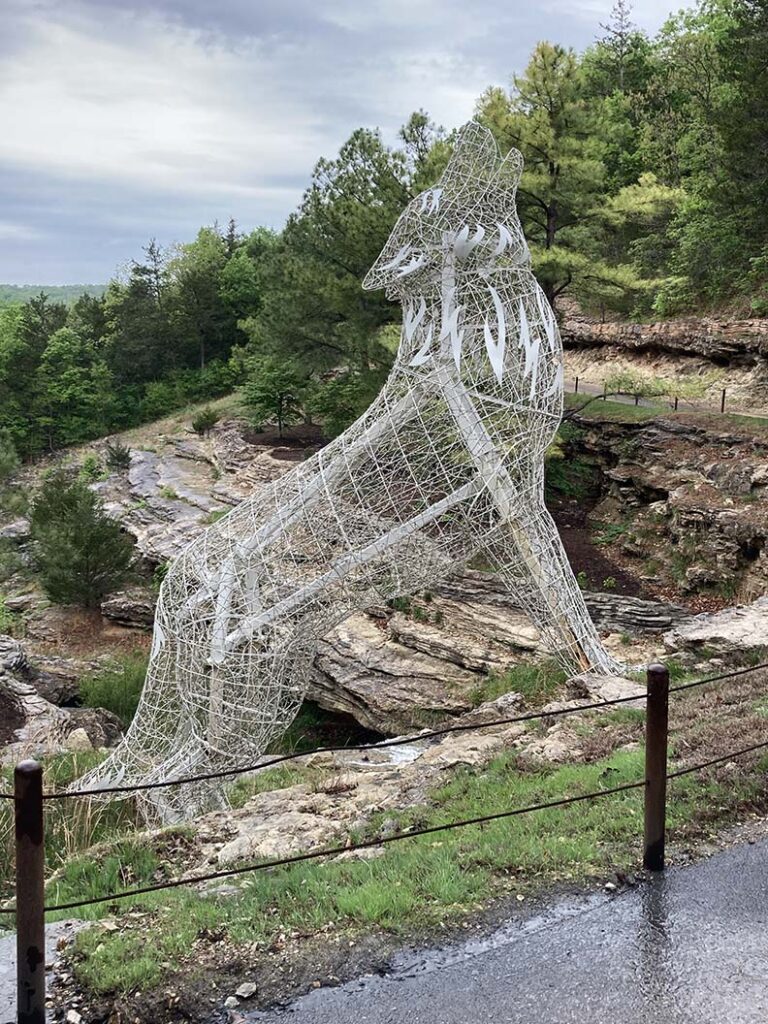
Squirrels are the most likely animals you will see, although there are plenty of chipmunks, turtles, raccoons, ground hogs, owls and eagles inhabiting the area. Wolves, deer, and elk are some of the larger-sized animals you might see along the way.
The trail leads through the Bat Cave and right past the Bat Cave Bar where each person with paid ticket receives a complimentary beverage. You don’t even have to get out of the cart. If you aren’t fascinated by bats, not to worry, you can focus on the waterfalls inside the cave.
Don’t be alarmed when you pass Bear Cave; the roar of an angry bear is actually a motion-sensor sound effect.
Pollination Garden is a lovely area. Specific flowers are selected and planted for the purpose of naturally attracting bees.
Nature at Night is another delightful way to enjoy the Lost Canyon Cave and Nature Trail located in Top of the Rock. This is a special event reserved for Friday, Saturday and Sunday nights only from Veteran’s Day through Memorial Day. Experience the splendor of nature at night enhanced by lighting specifically designed to showcase the Ozarks. Drive your cart through the light tunnel or stop to photograph the reflection of lights from one of the water sources. Illuminated figures of wildlife animals are scattered throughout, plus an occasional wall or overhead veil of fairy lights accent the scenery.
In retrospect, I can honestly say, this was the first time I can recall actually enjoying the time spent in the visual artistry of God’s creation. Making it user-friendly certainly made it easier to recognize just how lovely it is. Now I understand why people enjoy it so much. This was an unforgettable experience and I’m ready to go back . . . as long as there is perfect weather, paved trails, cushioned seats, and no need for bug spray or sunblock.
In other words, Nature for Sissies!
The Ancient Ozarks Natural History Museum
Located at Top of the Rock. This landmark was a first for the region which is surrounded by tourism and is significant in many ways.
The first thing I noticed was the illuminated stained-glass ceiling in the elevator. Yes, you read that correctly. I know elevators don’t normally have windows, but these set the tone for what was ahead of us: a step back in time.
 An easy to navigate, one way path through a subterranean location guarantees you pass by every exhibit. Chronologically displayed to depict the progression of civilization through the centuries, viewers are given a better understanding of the importance of history.
Early on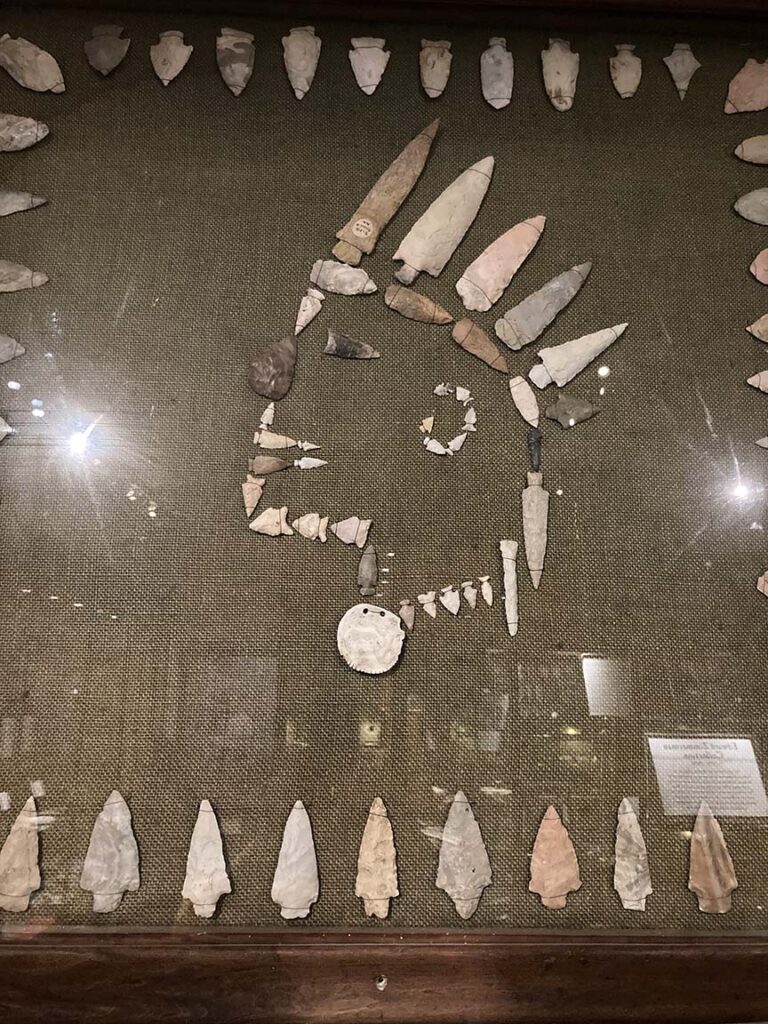 , one specific arrowhead collection caught my attention because of the way each stone had been placed to create the profile of a native warrior. It was also of particular interest because the label indicated that Johnny Morris had made this artwork display when he was in high school. His interest in preserving our heritage was evident decades ago.
In addition to arrowheads, there are numerous weapons and tools such as tomahawks and knives. Even with the simplest of tools, these early natives made clothing, footwear, toys and dolls plus larger items such as saddles.
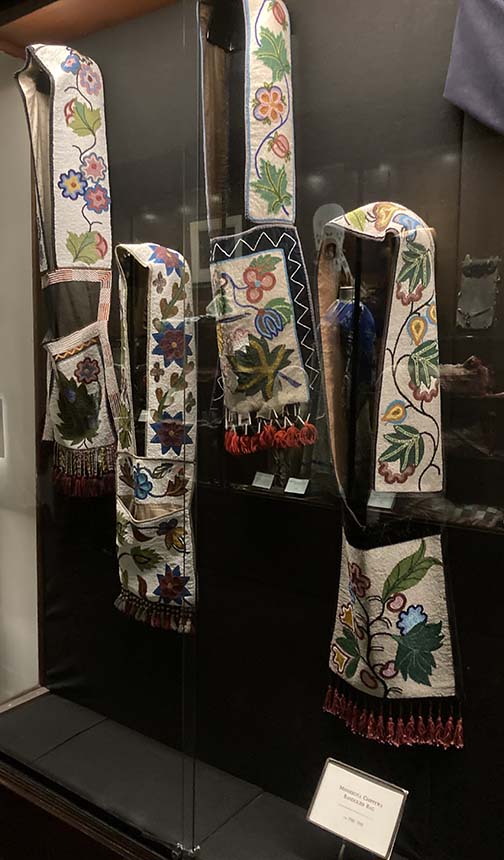 Creativity and artistry of this region’s early inhabitants was evidenced by the designs on their hand-made pottery vessels. In my opinion, their greatest artistic flair is most obvious through the intricate beadwork patterns of their clothing. It was a bit of a surprise to see the tiniest of beads worked into beautiful floral designs. There was also a display explaining and showing some of the copper needles available to them along with handmade fishhooks. The old saying is true: necessity is the mother of invention.
Another surprise was the musical instruments created by these tribes. In addition to drums, there were flutes. During our visit, the mellow tones of a Native American Flute were audible throughout the entire gallery.
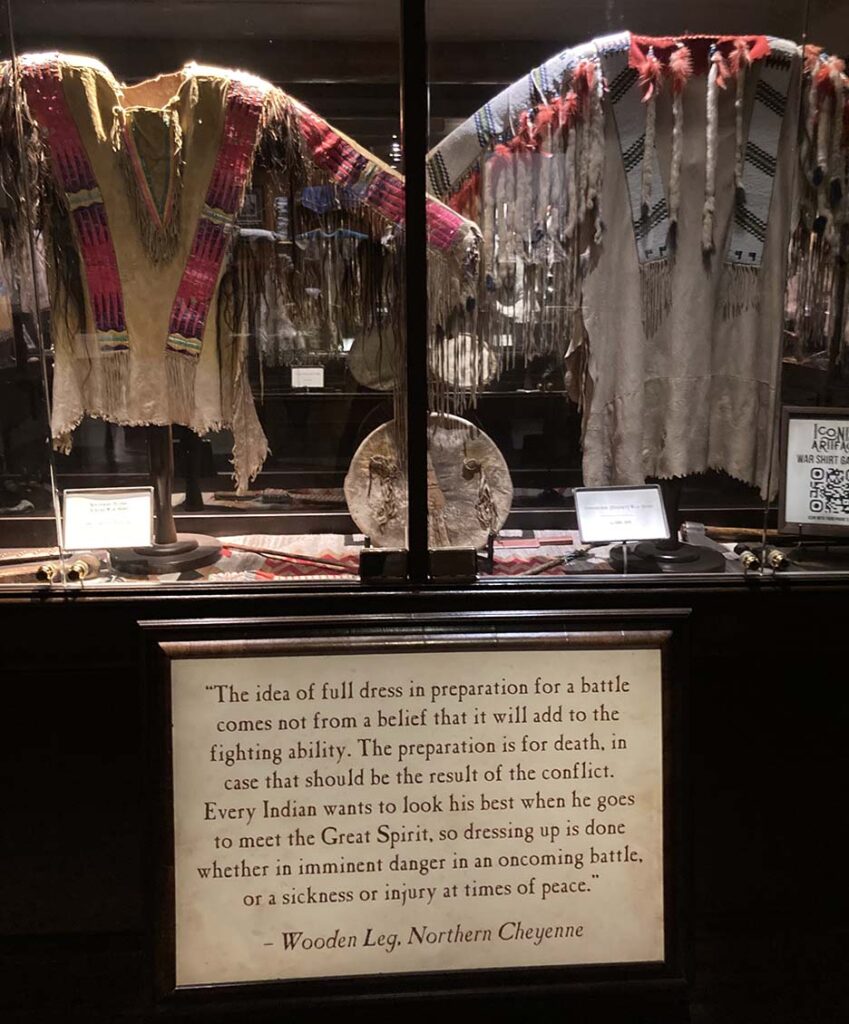
There were numerous descriptions available to explain not only what we were seeing, but why it was important. For instance, I learned why the warriors wore their best attire when going into battle. (Spoiler Alert: It’s not for identification.) There were also several very long hair extensions from the late 1800’s and a headdress long enough to drag onto the ground unless the wearer was extremely tall.
Drawings, paintings and photographs corroborated what we were taught in school. The faces of these native inhabitants exposed a hard life but also revealed a deep pride in their heritage. These tribes were loyal to their families and nation.
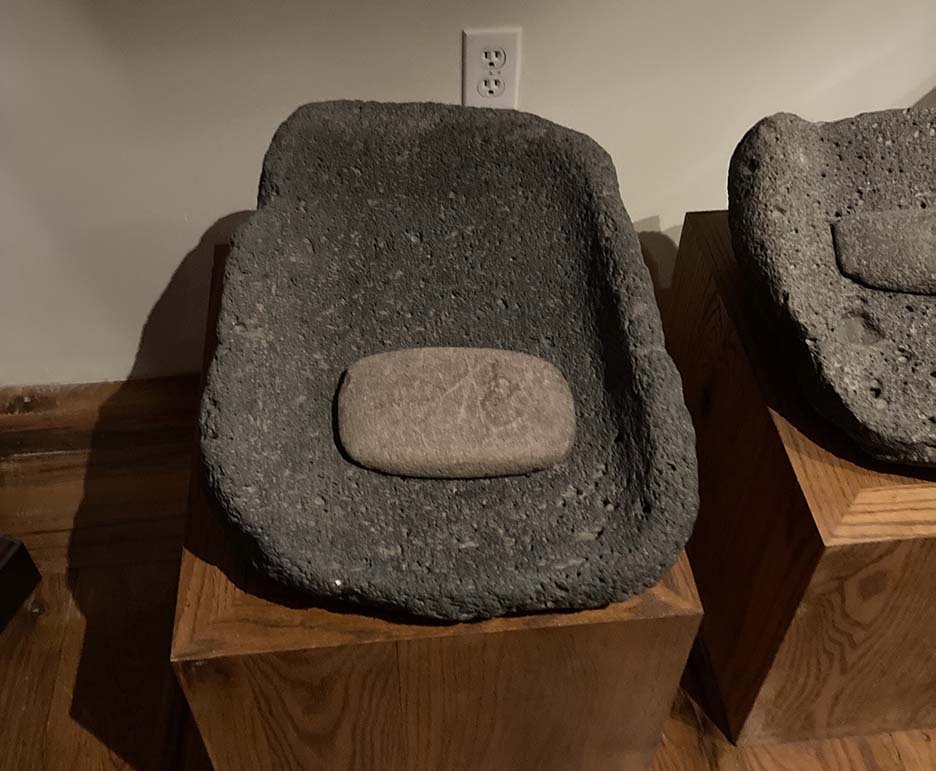 For example, often there was a communal object called metate. This was a large rock, shaped like a shallow bowl, accompanied by a smaller rock. The concept is similar to the mortar and pestle used in an apothecary setting, however these were larger and used for grinding grains to prepare for food. Unfortunately, when two stones were ground together, fine grains of sand were created and got mixed into the food source. Ultimately, this led to teeth being worn flat. With no modern dentistry, dental disease became a leading cause of death in these cultures.
The gradual progression of time depicted in the museum ultimately leads to the map of the Trail of Tears. History shifted once entire civilizations were relocated to reservations. Likewise, the characteristics of museum displays changed also.
The Civil War era displays are centered around military uniforms and canons of all sizes. Abraham Lincoln’s desk and a few of Mary Todd Lincoln’s actual clothes are objects of interest.
Civil War Medals and carefully preserved actual newspaper pages are framed and located throughout along with recovered American flags of various ages. These authentic banners are old, thin, stained, torn or a combination of the above with various star counts. There was one with only 13 stars, so I assume it is the oldest. Another had 37 stars. We saw configurations of a star, a circle, straight rows and a staggered grid such as we use now.
While browsing this era, we saw cowboy hats, saddles, covered wagons and a chuck wagon so often used on cattle drives.
Traveling through this historical progression I saw how two separate cultures, though not blended, had each contributed to the development of civilization. I discovered a newfound appreciation for the natives of this land we call home. Their lifestyle was not simply evidence of how things were before our nation came to be. Their ways were different and yet necessary based on the resources available to them.
Unlike some theatrical portrayals, these natives were not backwards. A wealth of information had been gleaned from their ancestors regarding uses of wildlife for sustenance and medicinal purposes. There is evidence of their ingenuity in developing tools as needed in order to survive long before the progress of modern life as we know it. In some ways it is sad to think of how life could have been better if the two had been able to coexist.
Situated near the exit of the museum is a stack of reprints of Chief Seattle’s reply to the offer for land promised to the Indian nations for the purpose of a reservation. This profound statement is a beautiful reminder of the importance of preservation of environment. Recognizing the wisdom of his words, as Commencement Speaker, Johnny Morris’ presented it to the Graduating Class, University of Missouri – School of Natural Resources in 1995.
It begins with the admonition to remember The Earth is Precious and ends with the reminder that we all face a common destiny. According to Chief Seattle, “All things are connected. We may be brothers after all.”
Profound Indeed!

OSAGE RESTAURANT
After a full day of enjoying the great outdoors followed by an enriching venture into our heritage, it was time for a good meal. For the ultimate dining experience, Osage Restaurant offers upscale regional cuisine.
Each item featured on the à la carte menu is designed to compliment the many local cuisine options. Unique appetizers and specialty salads, are the precursor to delicious entrees.
Naturally, there are numerous seafood choices along with chicken, chops and steaks, some served with savory sauces. Side dishes are a bit more traditional, so you’ll be sure to find your favorites.
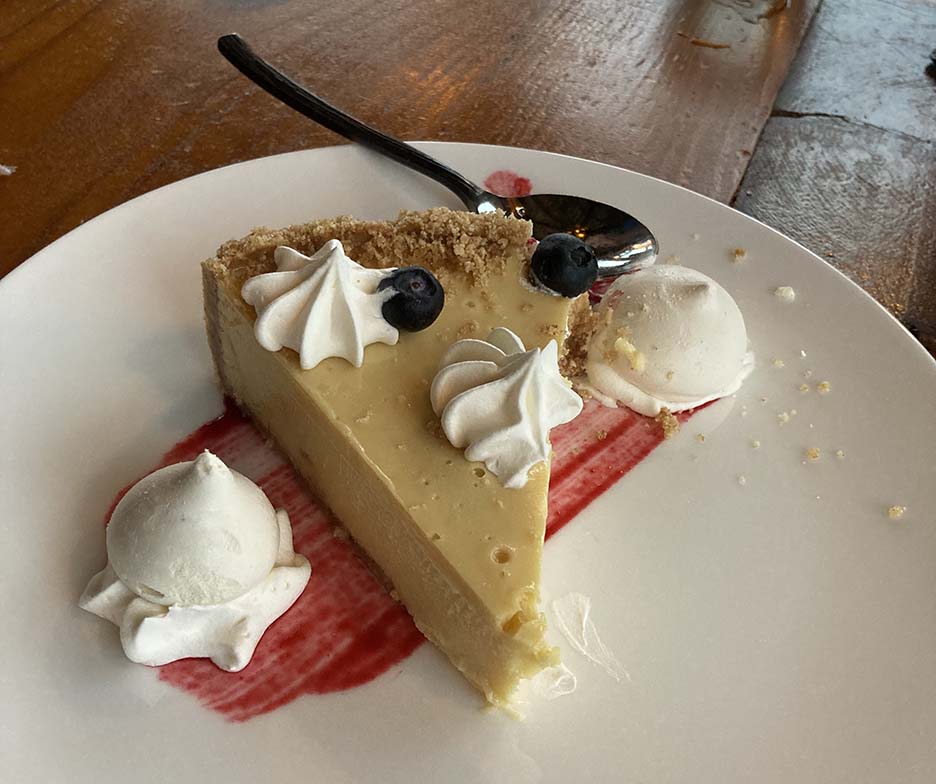
The dessert menu boasts some local favorites along with some more time-honored options which pair well with seafood.
Osage Restaurant offers a panoramic view of the property from the chapel to the golf course with Table Rock Lake visible in the background. Just when you think it can’t get any better, there’s a surprise waiting. Johnny Morris created a way to encourage visitors to stop and appreciate their surroundings.
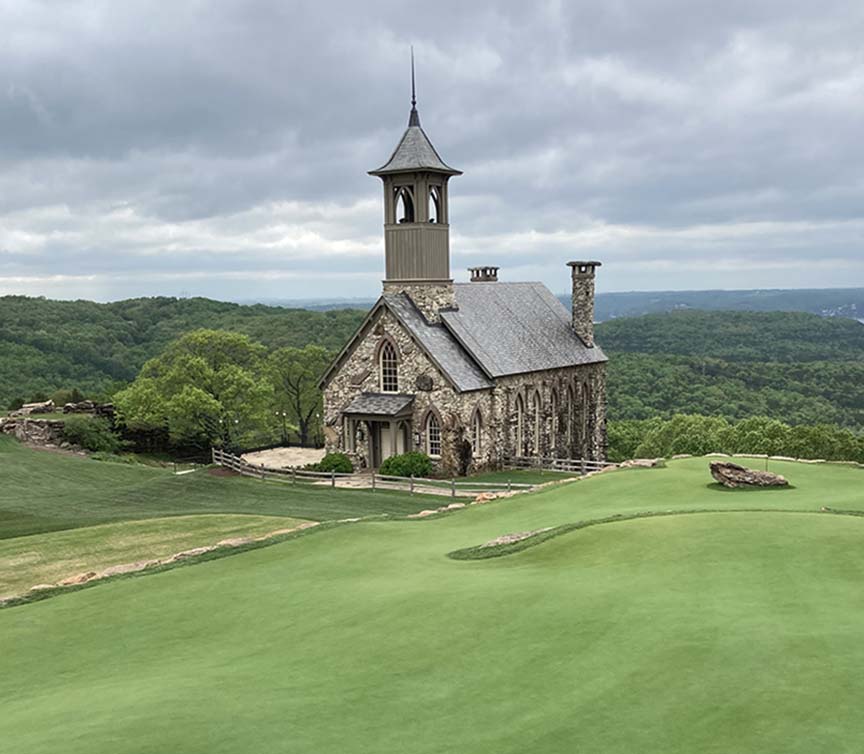
The Sunset Ceremony at Top of the Rock is one of the most awe-inspiring moments you can witness while visiting Big Cedar Lodge. Take in the sun as it sets on Table Rock Lake while a traditional bagpiper plays in the background. Then, just as the sun shows its final glistening light, you will hear an authentic civil war cannon erupt as you raise your glass for a toast – concluding a moment that you will look back on for years to come.
For more information, visit https://topoftherock.com
