 Extended Weekend Getaways
By Heather Raulerson
Freelance Author & Photographer
History is right there on the surface, but so are the stories people swear still linger along with the ghosts. Ledgers and court records back some of these stories. Others appear in the form of footsteps echoing down empty hallways or lights that flicker with no one around.
I wanted to see it for myself, so I set off on a ghost-chasing road trip through Tombstone, Bisbee, Tucson, and the Ghost Town Trail. Along the way, I joined three different ghost tours, each of which gave me more goosebumps than I expected.
Tombstone: Where Legends Don’t Stay Quiet
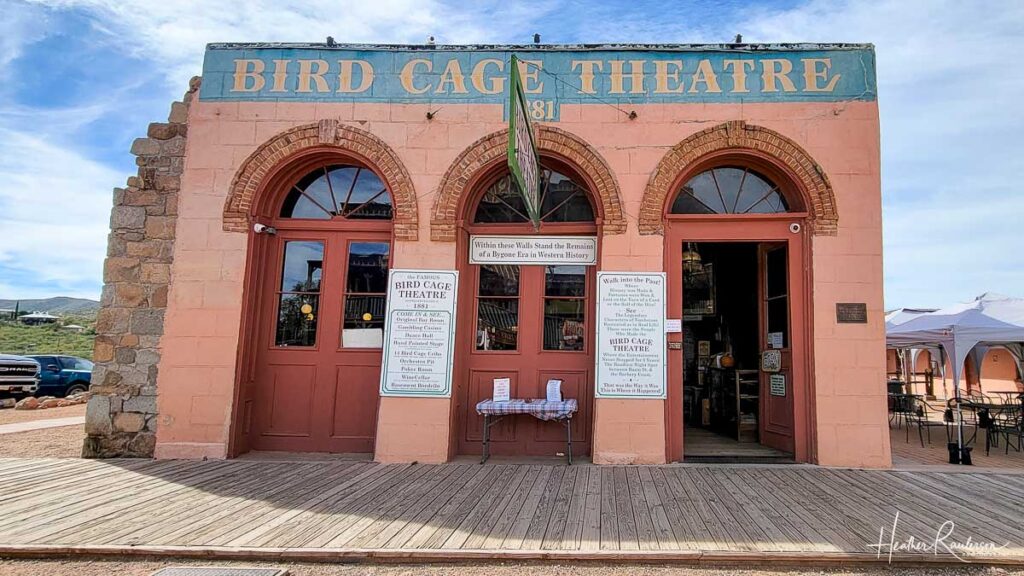
Tombstone Bird-Cage Theatre Photo by Heather Raulerson
Tombstone’s reputation was earned fast. Silver was discovered, the town boomed, and chaos came right along with it. The Bird Cage Theatre was part saloon, part gambling hall, part theater, and by all accounts, part bloodbath. More than twenty people reportedly died inside, which explains why staff and visitors still hear voices, music, and see shadows dancing near the balconies. The O.K. Corral had the infamous 30-second gunfight that ended with three cowboys dead, igniting the Earp and Clanton feud. These and many more gunfights added to why Tombstone is dubbed “The Town Too Tough to Die.”
I joined the US Ghost Adventures tour in Tombstone, which included stops at the Bird Cage Theater, the O.K. Corral, and many other locations. They gave us EMF readers, little devices that detect electromagnetic fields, often used on ghost hunts. Mine lit up quite a bit, and the guide admitted it was “more active than usual.” It’s hard not to shiver when you’re holding a buzzing reader while standing next to the place where shootouts once happened. We even heard the phantom gunshot on the tour that many others swear they have heard in Tombstone.
Outside, Tombstone feels like a Wild West set frozen in time. You can stroll down Allen Street, where the Earps and the Clantons had their infamous showdown. But at night, when the tourists clear out and the wooden boardwalks creak, the ghost tours bring the town to life in a whole different way. The guides lead you past saloons and old hotels, pointing out the exact spots where the town’s violence left its mark. The mix of hard history and whispered ghost stories makes Tombstone an unforgettable destination.
Bisbee: Mining Riches and Haunted Heights
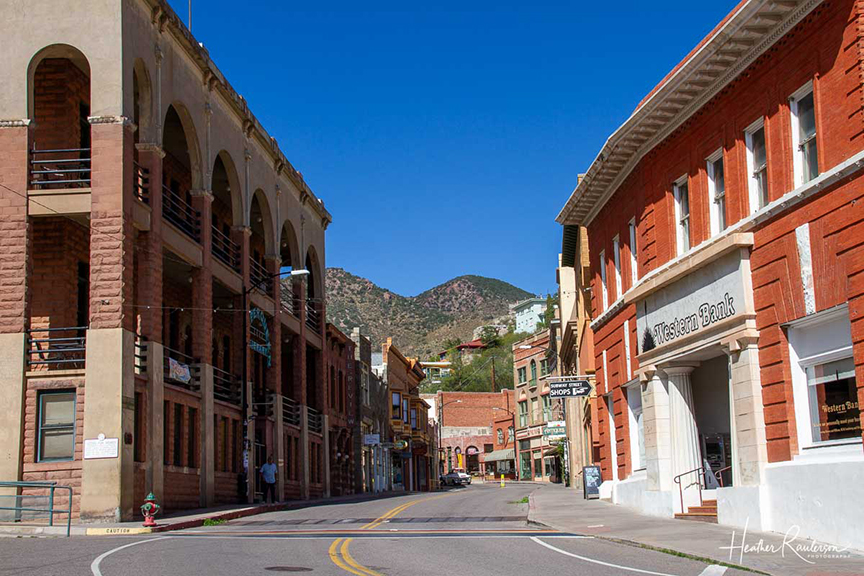 Thirty miles south of Tombstone, Bisbee rises out of the Mule Mountains, a copper boomtown turned artsy mountain getaway. But beneath its colorful exterior, the ghost stories keep stacking up.
The Copper Queen Hotel is one of the most famous haunted sites, still welcoming guests after more than a century. People report seeing the ghost of Julia Lowell on the upper floors, and she has even been known to tickle the feet of single men who have stayed in her room or the little boy playing by the staircase, who only shows himself to children. The smell of cigar smoke has been reported to drift through non-smoking rooms, and footsteps have been heard echoing in empty hallways. Whether you believe in ghosts or not, the creaks of this old hotel at night will make you think twice before sleeping with the lights off.
I joined the Old Bisbee Ghost Tour, which winds up and down the city’s steep stairways and narrow alleys. The guides weave history with hauntings, and it feels like every corner has a story to tell. The moment that really got me? I was the straggler in the group and was taking a photo of the courtyard outside the old Harvey House, where 26 people had died. After I clicked the shutter, I saw a large black shadow that rushed toward me. Spooked, I made a beeline to catch up to the group. Bisbee has a way of wrapping its arms around you, and sometimes those arms feel a little too cold.
What makes Bisbee unique from other haunted towns is its layout. The whole city seems stacked on top of itself. Walking those steep staircases at night, with old miner houses looming overhead, makes it way too easy to imagine spirits still drifting between them. Spend a night if you can. Sit in the Copper Queen’s lobby with its vintage furnishings, wander down Brewery Gulch, and let the town do the storytelling for you.
Tucson: Ghosts in the Big City
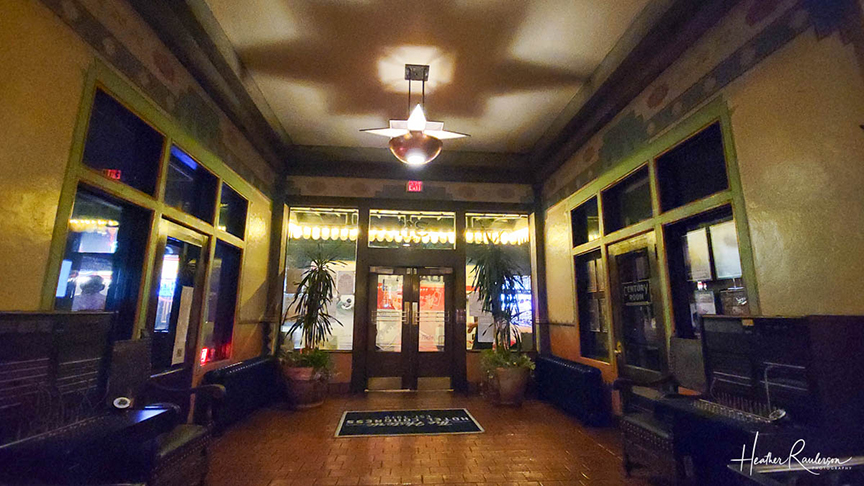
Tucson-Hotel Congress Lobby Photo by Heather Raulerson
Tucson may be bigger than Tombstone and Bisbee, but its haunted history is just as deep. With roots dating back to the Spanish presidio and the railroad, the city’s historic core is filled with brick buildings and century-old hotels.
The most famous is the Hotel Congress, built in 1919 and forever linked to gangster John Dillinger, who was captured there in 1934. Guests report radios switching on by themselves, knocks on doors when no one is there, and even full-body apparitions in the hallways. The hotel doesn’t shy away from the stories; they even advertise “haunted rooms” if you want to tempt fate. They are even bringing back haunted tours within the hotel in the fall.
I took the US Ghost Adventures tour in Tucson, which winds through downtown and the historic barrio. Just like in Tombstone, they handed out EMF readers. Mine lit up nearly the entire time as I held it out like I was holding hands with someone. The guide was surprised that I had such a strong connection to the spirits, as it had stayed active with us throughout the whole tour. Some would find it unnerving, but the spirit was watching out and protecting us, as this was a private tour with just me and the guide.
The Ghost Town Trail: Pearce, Courtland, Gleeson
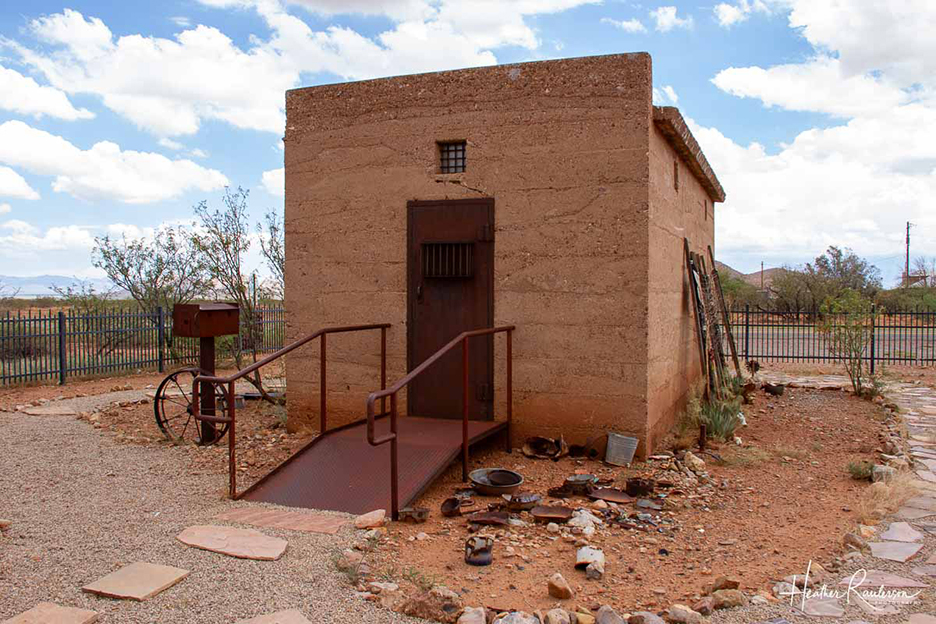
Pearce Jail Photo by Heather Raulerson
If active ghost towns weren’t enough, there’s a short desert loop east of Tombstone called the Ghost Town Trail. This 18-mile stretch connects three former mining towns, each now reduced to ruins and silence.
Pearce kicked things off in 1894 when James Pearce found gold and silver in the Commonwealth Mine. At its peak, the town had more than 1500 residents; today it has 15. You can still see the old mercantile, jail, and a few remaining structures. The silence is part of the atmosphere; this place feels emptied, but not abandoned. If you go a little north, you can explore the Pearce Cemetery, where Abraham Lincoln’s bodyguard, George Hart Platt, is buried.
Courtland, just down the road, boomed fast and died even faster. Copper and gold drew workers to the region and its 23 mines in the early 1900s, but when the ore reserves were depleted, everyone left. What’s left today are stone foundations, rusted equipment, and that eerie sense of how quickly fortunes can vanish. Courtland feels raw, stripped bare by the passage of time.
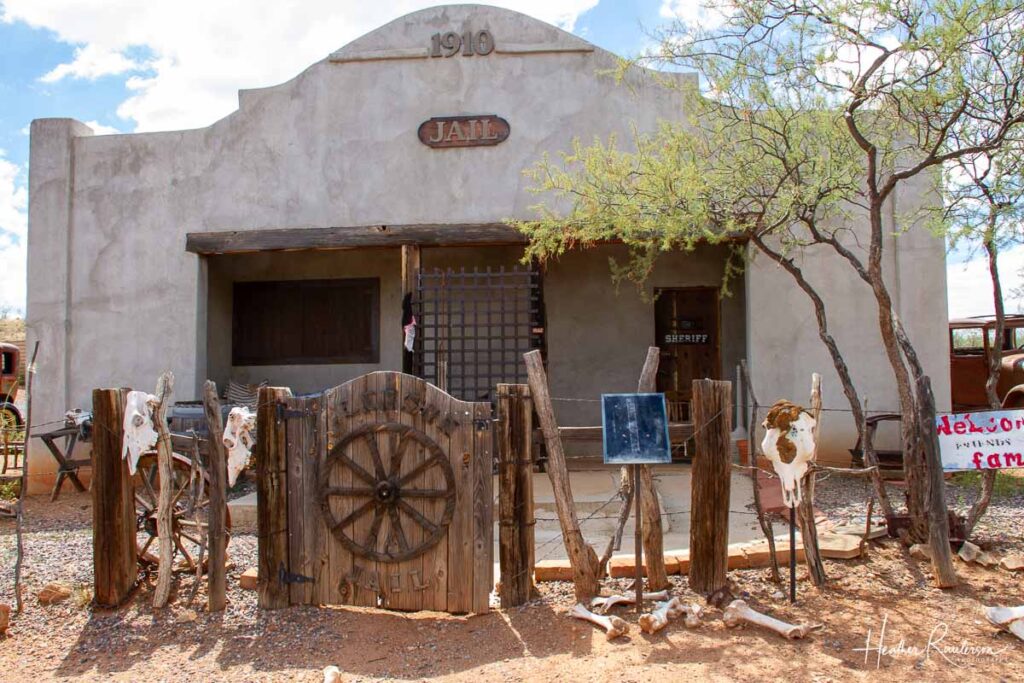
Jail in Gleeson Photo by Heather Raulerso
Gleeson holds onto more of its history, with the restored Gleeson Jail standing as the centerpiece. The tiny museum is open on certain weekends, filled with photos and stories from the town’s heyday. Walking the dirt roads, driving past mine shafts and the cemetery, you get a sense of the people who once worked and died here. In the desert light, every broken wall and weathered headstone takes on sharper meaning.
If you plan on driving the Ghost Town Trail, there are a few things you need to know. Ensure you are prepared with water, snacks, a spare tire plan, and a printed map or a saved offline map. Check the weather, as the quickly approaching summer rains can make this route hazardous due to dips in washes that flood. If you plan to take photos, be sure to wear closed-toe shoes, not sandals (beware of rattlesnakes). Respect the sites and refrain from entering boarded structures or private land. Essentially, remember the golden rule: Take nothing but photos, Leave nothing but footprints.
Do the Ghost Tours Make a Difference?
Absolutely. Without the tours, you’d still see history. With them, you gain context that transforms odd noises into rich, layered stories. In Tombstone, standing by the Bird Cage Theatre while your EMF reader jumps makes the past feel present. In Bisbee, having a guide explain how the wind funnels through stairways helps you understand why some people swear they hear voices. In Tucson, guides peel back the layers of Dillinger myths and show you how fact and folklore blend inside Hotel Congress.
The result? You learn more, and the scares land harder.
Why Southeast Arizona is Perfect for Ghost Hunters And Skeptics
At night, Southeast Arizona goes still in a way big cities never do. Old wood creaks, metal shifts, and silence stretches long enough that your mind fills in the rest. Add in the region’s history, mine accidents, fires, gunfights, marshals, and outlaws, and it’s easy to see why ghost stories thrive in this area. You don’t need to believe in ghosts to enjoy it. You can treat the tours as immersive history lessons or lean into the eerie side of things. Either way, the towns take on new life after dark.
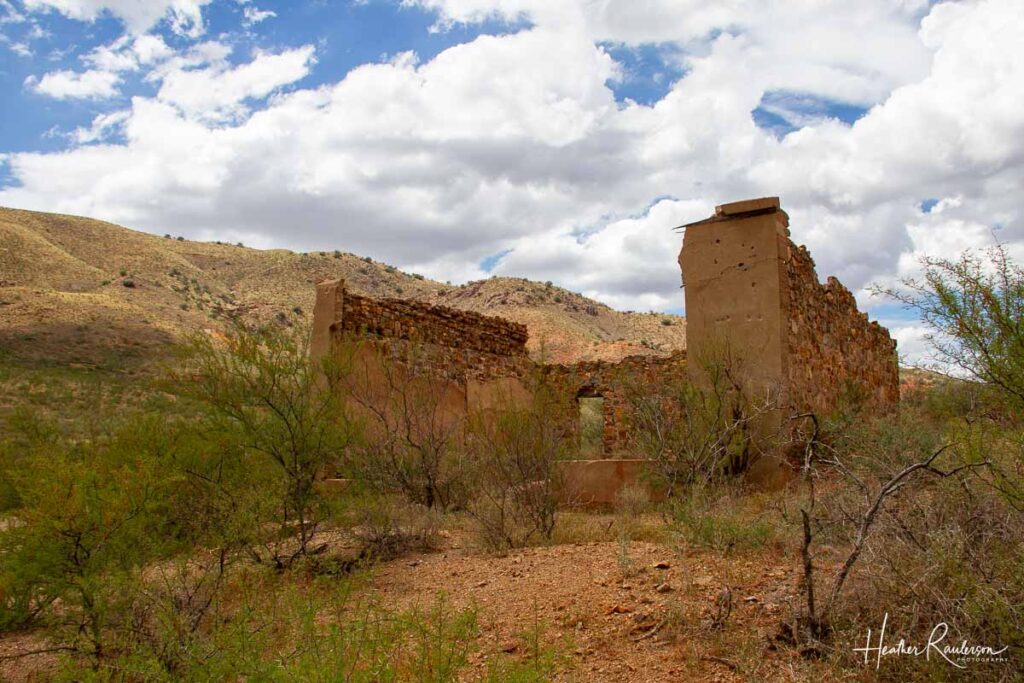
Ghosts Courtland Ruins
This road trip through Tombstone, Bisbee, Tucson, and the Ghost Town Trail taught me that history and hauntings go hand in hand. The history is real, documented in ledgers and old photos. The hauntings are harder to pin down, personal and unproven, but that’s what makes them compelling. Southeast Arizona is a place where the past doesn’t feel gone; it feels like it’s waiting for you to notice.
And if you do, don’t be surprised if something follows you back to your car.